04/11/2026
CORROSION IN REINFORCED CONCRETE (RC)
CORROSION IN REINFORCED CONCRETE (RC)
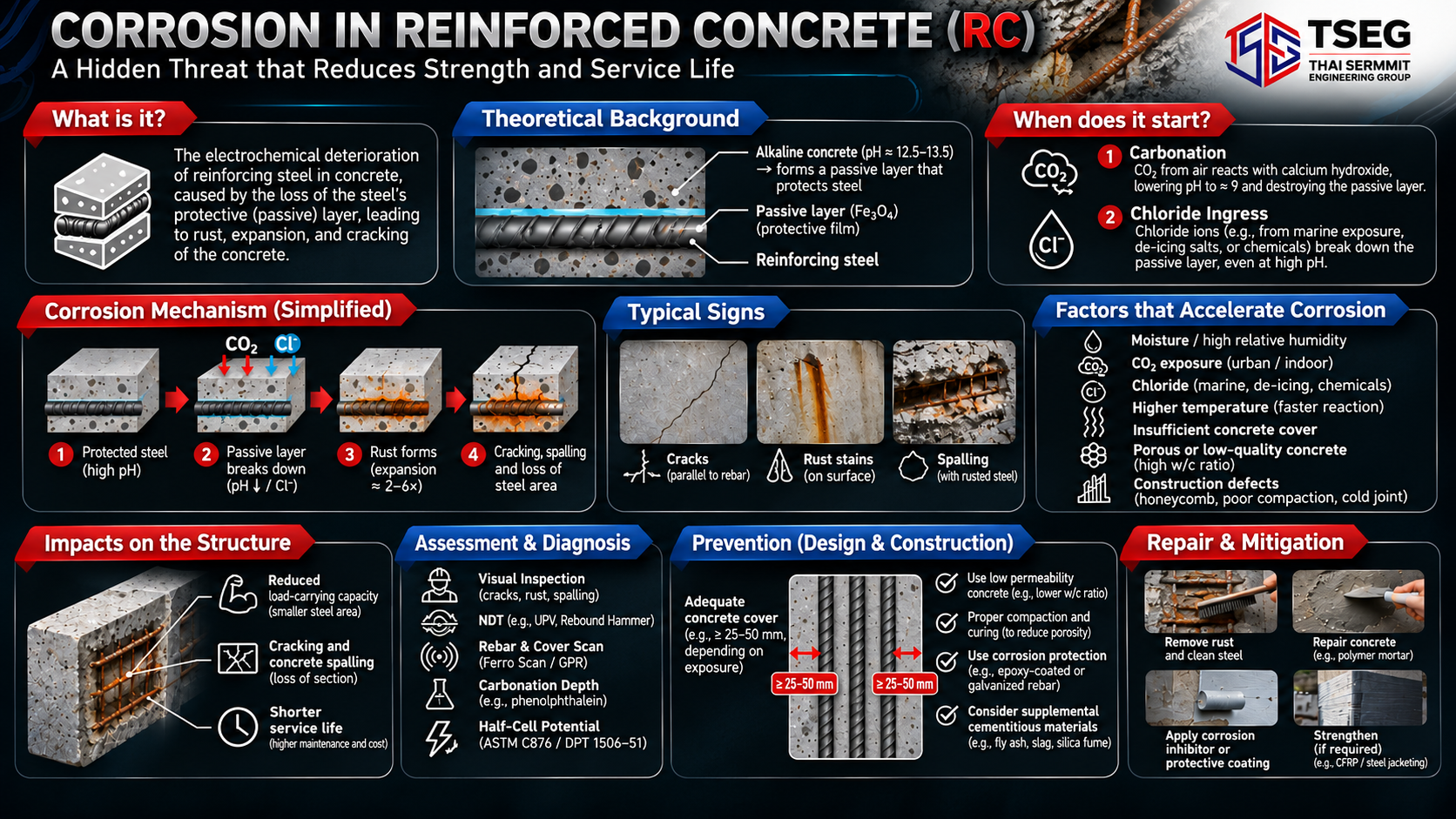
The Hidden Threat to Structural Safety and Service Life
Concrete may appear strong and durable, but deterioration can develop beneath its surface long before visible damage occurs.
One of the most significant threats to reinforced concrete structures is steel reinforcement corrosion.
🔴 HOW DOES CORROSION OCCUR?
Under normal conditions, concrete's high alkalinity (typically pH 12.5–13.5) creates a protective passive layer around embedded steel reinforcement.
However, this protection can deteriorate through two primary mechanisms:
🔹 Carbonation: Atmospheric CO₂ penetrates the concrete and reacts with alkaline compounds, gradually reducing pH and potentially destroying the steel's passive layer.
🔹 Chloride Ingress: Chloride ions penetrate the concrete and can locally break down the passive layer, even when the surrounding concrete remains highly alkaline.
When the passive layer breaks down and sufficient moisture and oxygen are available, electrochemical corrosion can develop.
⚠️ FROM CORROSION TO STRUCTURAL DETERIORATION
The deterioration process generally follows four stages:
1️⃣ Passive Protection – Steel remains protected within alkaline concrete.
2️⃣ Depassivation – Carbonation or chloride exposure compromises the protective layer.
3️⃣ Corrosion Development – Rust products accumulate and generate expansive pressure within the concrete.
4️⃣ Structural Damage – Cracking, delamination, spalling, and reinforcement section loss may occur.
The consequences may include reduced steel cross-sectional area, weakened steel–concrete bond, reduced structural capacity, and shortened service life.
🔍 EARLY WARNING SIGNS
Watch for:
✔ Cracks following reinforcement lines
✔ Rust stains on concrete surfaces
✔ Delamination or concrete spalling
✔ Exposed or visibly corroded reinforcement
✔ Persistent moisture and water leakage
Important: Corrosion can develop before these symptoms become visible.
🛠️ HOW CAN WE ASSESS CORROSION?
A systematic engineering investigation may include:
🔹 Visual Inspection – Identify and map deterioration.
🔹 Half-Cell Potential (ASTM C876) – Evaluate the probability of active reinforcement corrosion.
🔹 Carbonation Depth Testing – Determine carbonation penetration relative to reinforcement cover.
🔹 Concrete Cover Measurement – Assess reinforcement location and protective cover thickness.
🔹 Chloride Content Testing – Evaluate chloride contamination at relevant depths.
🔹 UPV and Rebound Hammer Testing – Provide supplementary information on concrete condition and uniformity, but do not directly measure corrosion.
🛡️ PREVENTION IS BETTER THAN REPAIR
Long-term durability depends on proper structural design, adequate concrete cover, low-permeability concrete, effective curing, moisture control, and appropriate corrosion protection.
For existing structures, repair strategies should address both the **visible damage and its underlying cause to reduce the risk of recurring deterioration.
💡 ENGINEERING INSIGHT
Corrosion is not merely a surface defect. It is an electrochemical deterioration process that can progressively compromise structural performance.
Early detection, proper diagnosis, and timely intervention are essential to extending the service life of reinforced concrete structures.
━━━━━━━━━━━━━━━━━━
🏢 TSEG | Thai Sermmit Engineering Group
Structural Inspection • Material Testing • Structural Assessment • Strengthening & Rehabilitation
🌐 www.tseg.co.th
#TSEG #StructuralEngineering #ReinforcedConcrete #ConcreteCorrosion #StructuralInspection #ConcreteDeterioration #CorrosionAssessment #StructuralSafety #BuildingMaintenance #CivilEngineering
อ่านต่อ
04/11/2026
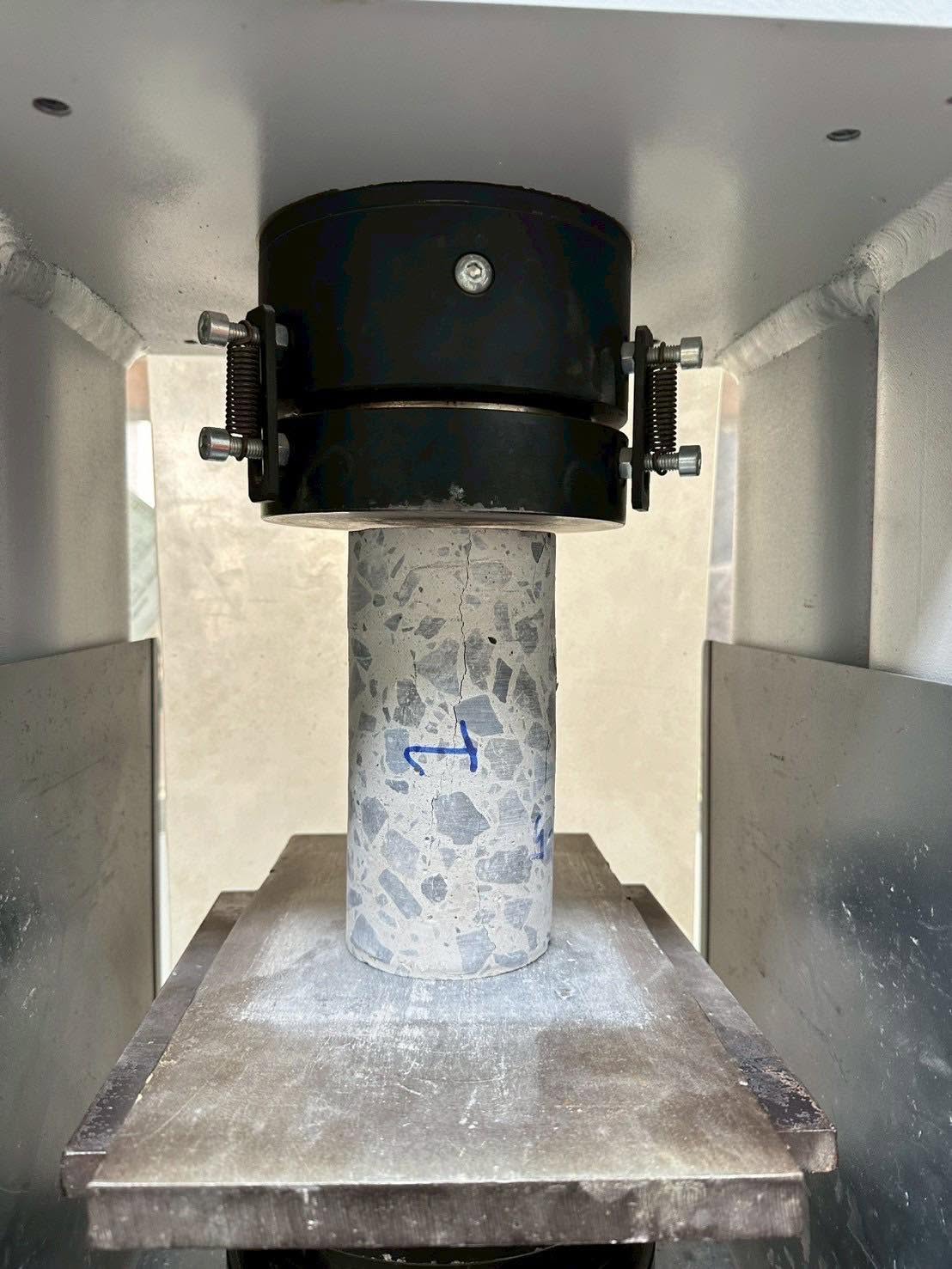
ทำไมการทดสอบกำลังอัดคอนกรีตจึงต้องสนใจอัตราส่วน L/D?
หลายคนอาจสงสัยว่าทำไมมาตรฐานการทดสอบกำลังอัดคอนกรีตถึงต้องกำหนดอัตราส่วนระหว่างความสูงต่อเส้นผ่านศูนย์กลางของตัวอย่าง (L/D หรือ h/d ratio) เอาไว้อย่างชัดเจน โดยทั่วไปมาตรฐานสากล เช่น ASTM C42 และ ACI 318 กำหนดให้ใช้อัตราส่วนนี้ที่ 2.0 เสมอ
เหตุผลที่ต้องกำหนดอัตราส่วน L/D = 2.0
• ลดผลกระทบจากแรงเสียดทาน: อัตราส่วนที่เหมาะสมจะช่วยลดแรงเสียดทานที่เกิดขึ้นระหว่างหน้าสัมผัสของตัวอย่างกับแท่นทดสอบ ทำให้ผลการทดสอบแม่นยำยิ่งขึ้น
• ป้องกันการโก่งงอ (Buckling): หากใช้ตัวอย่างที่มี L/D มากเกินไป จะมีโอกาสที่ตัวอย่างจะโก่งหรือโค้งงอระหว่างการกด ส่งผลให้ค่าที่ได้ต่ำกว่าความเป็นจริง
• มาตรฐานเปรียบเทียบผล: การกำหนดค่า L/D เป็นมาตรฐานทำให้สามารถเปรียบเทียบผลทดสอบระหว่างโครงการหรือการศึกษาต่างๆ ได้ง่ายขึ้น
กรณีที่อัตราส่วนไม่ใช่ 2.0 ต้องทำอย่างไร?
กรณีที่จำเป็นต้องใช้ตัวอย่างที่อัตราส่วนต่างจาก 2.0 สามารถใช้ตัวประกอบปรับแก้ (Correction Factor) ตามที่มาตรฐาน ASTM C42 ระบุไว้เพื่อให้ได้ผลที่ถูกต้องและเทียบเคียงกับตัวอย่างมาตรฐาน
L/D Ratio ตัวประกอบแก้ไข (Correction Factor)
2.00 1.00
1.75 0.98
1.50 0.96
1.25 0.93
1.00 0.87
การเข้าใจเรื่องนี้จะช่วยให้วิศวกรและช่างเทคนิคสามารถควบคุมคุณภาพของงานคอนกรีตได้อย่างมีประสิทธิภาพยิ่งขึ้น
อ่านต่อ
03/11/2026
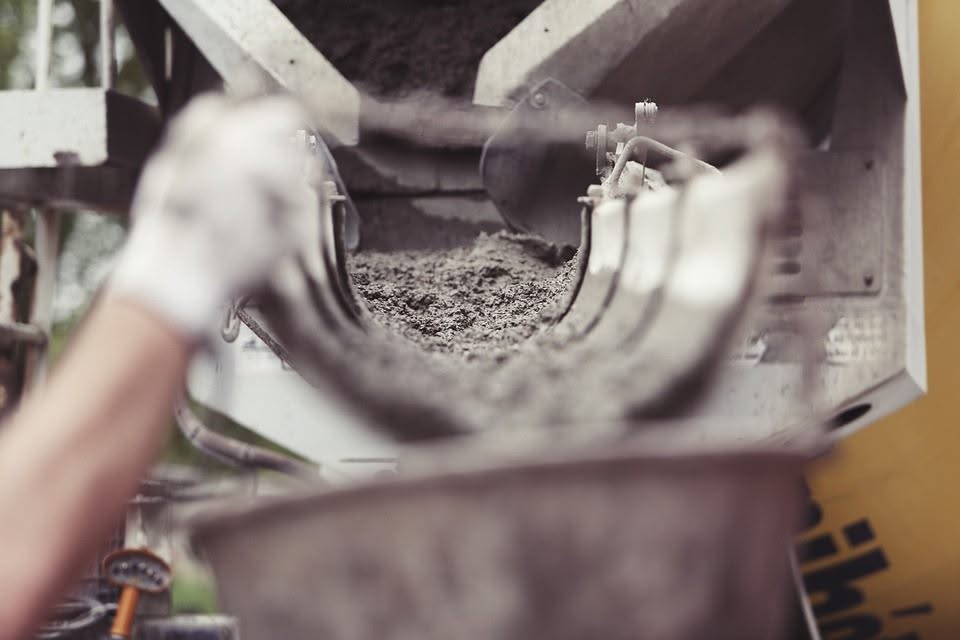
เทคอนกรีตกลางอากาศร้อน ต้องคุมอะไรบ้าง?
อากาศร้อนทำให้คอนกรีตสูญเสียความสามารถในการทำงานเร็ว ก่อตัวเร็ว และเสี่ยงแตกร้าว โดยต้องพิจารณาร่วมกันทั้ง “อุณหภูมิอากาศ อุณหภูมิคอนกรีต ความชื้นสัมพัทธ์ และความเร็วลม”
อ่านต่อ